How do you handle your employee's mental health crisis as a leader?
 Łukasz Wróbel ·
When an employee goes on sick leave because they struggle with their mental health, do you tell the team exactly what happened? Or maybe you pretend it’s just a common cold? Unspoken tension arises until someone asks openly.
According to an NHS survey published in 2025, 18% of employed adults aged 16 to 64 in England had a common mental health condition in the past week. And leaders are not always trained to deal with team members’ mental health problems. This is why I’d like to share some of my experience with it.
First things first, talk to the struggling employee. Offer them your support, but don’t dive too deep into the nature of the problem. The workplace is not meant for healing, and you’re not their therapist. What you can do is to assure the employee that you will help take care of the situation. Offer time off, or let them stay on with a reduced workload. The employee knows better than you what will work for them.
I’d also advise asking the employee to get professional help. Every health issue requires action, and a mental health problem isn’t any different. I think asking them to get help is a genuine sign of care. Not to mention that the WHO recommends training managers so that more workers seek help.
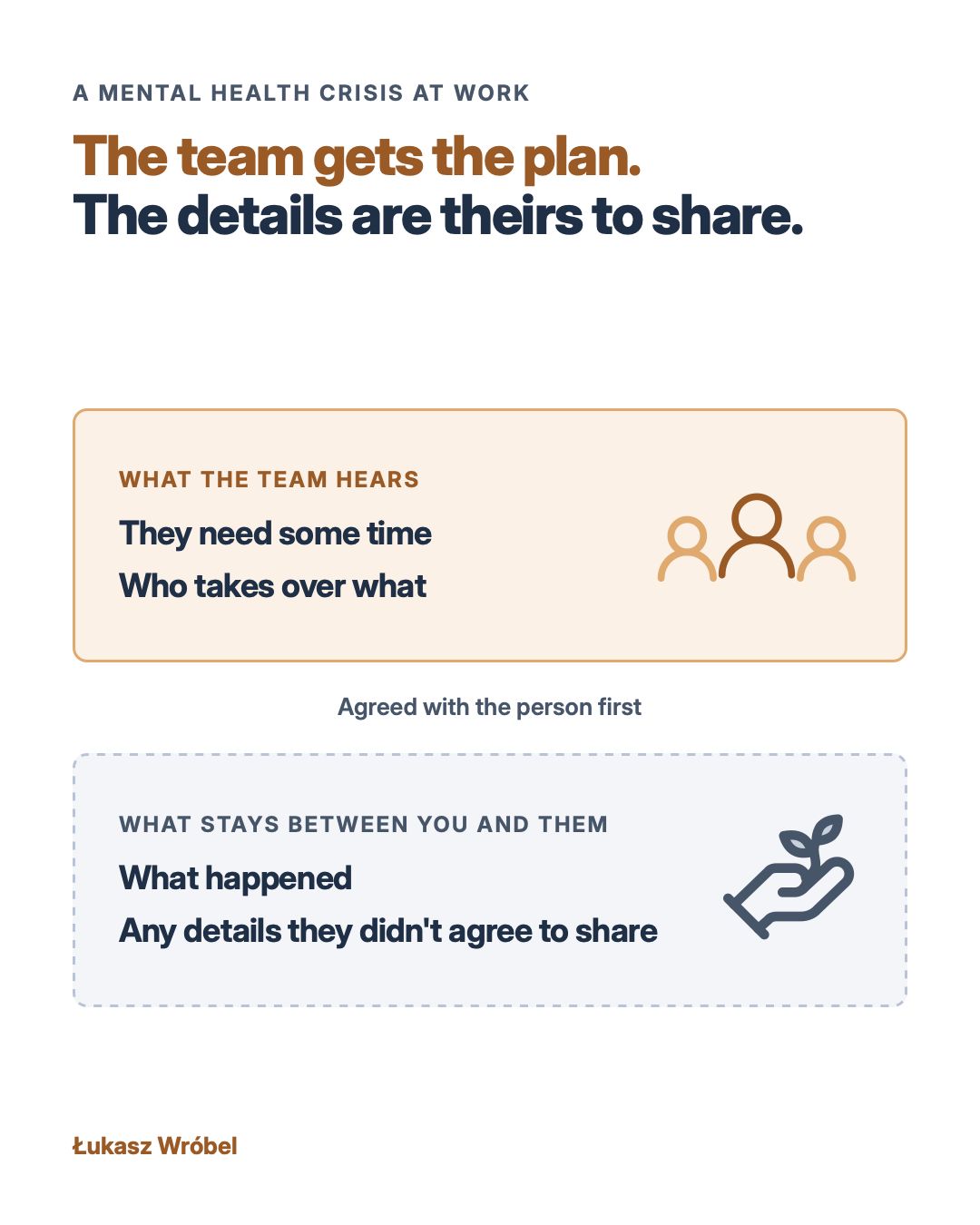
Remember not to share any details without the employee’s consent. Doing otherwise may break their trust and get you in trouble. Share details only if the employee has allowed it.
The absolute minimum that the team needs to hear from you is the plan. Who will take over a project? Who is going to meet with the customer next week? My experience tells me that teams are more than willing to cover for someone who has always done their part but is struggling now. The employee being open about their situation eases the friction a lot, but you can’t demand it from them.
Stay in touch with the employee, on their terms. How often, in what form, and whether they want to hear about work or be shielded from it—that’s for the two of you to decide.
Does it always work out? In my experience, in most cases it does. And when it does, both the employee and the team may come out of the crisis stronger than before. On the other hand, sometimes it doesn’t work out, and sadly that means parting ways. There’s only so much you can do: you offer support, but you’re not directly responsible for their recovery. Remember you need to take care of yourself, too.
This is what turns “we’re here for you in hard times” from a slogan into something people have seen.